
Jeffersonville Previous-Resident Time Layers
Each source covers a different slice of an address history. Begin with the newest reliable fact and move backward. The modern parcel identifies the land; deeds identify owners and transfers; directories and censuses add dated household evidence. Jeffersonville's library collection bridges the years that current web portals cannot reach.
| Source | Years It Covers | Where Held | What It Shows |
|---|---|---|---|
| XSoft parcel card | Current, with sample assessment history 2021–2026 | Clark County Assessor | Parcel, situs, owner, legal description, transfers |
| Recorder index | November 1999 forward online | Recorder, Tapestry/Laredo | Instrument parties, dates, type, lot and block |
| Deed-index microfilm | Grantor 1860–1900; grantee 1870–1900 | JTPL Indiana Room | Older transfer-index trail |
| City directories | 1845–46 entry through 2017, with gaps | JTPL shelf, film, licensed and digitized sources | Dated names, occupations, residence or boarding marks |
| Census film | Indiana 1820–1880 and 1900–1930; territorial 1807 | JTPL Indiana Room | Household snapshots |
| Sanborn maps | 1886, 1898, 1904, 1911, 1925 | JTPL Indiana Room | Building footprint, use, number, nearby structures |
For recent previous residents, lock the XSoft parcel first and follow the recorder chain. For the nineteenth or early twentieth century, begin with the nearest directory, census, or Sanborn year, then confirm the land through deed indexes. No continuous online resident roll exists, so missing years are normal and should remain visible in the timeline.
Lock the Jeffersonville Parcel First
Search the current address in Clark County XSoft. Save the property number, state parcel number, situs address, ZIP, neighborhood, district, legal description, current owner, owner mailing line, transfer entries, sale entries, and acreage. A situs address is the physical location. The mailing line is where the owner receives tax mail and may be outside Jeffersonville.
The parcel is the stable hub for previous-resident work. Owner names can change, street wording can vary, and a deed may omit the familiar number. A legal description ties the trail to land through subdivision, lot, block, acreage, and adjoining-tract language. If several results share a number, compare the unit, property ID, class, and map polygon before selecting one.
Record adjoining parcel IDs too. They help when an older directory or map uses a corner, former lot line, or neighboring house number. Jeffersonville annexation references may appear in legal descriptions, while no official citywide street-number conversion table was found.
Reverse the Clark County Deed Chain
The Clark County Recorder provides the online starting point for deeds and miscellaneous instruments recorded from November 1999 forward. Tapestry search keys include names, document number and type, date range, consideration, subdivision, lot, and block. Laredo is a subscriber route. The Jeffersonville office also has public computers, and staff can direct a researcher but will not perform the search.
- Find the current owner's purchase deed. Capture the grantor, grantee, recording date, document number, type, and legal description.
- Search the seller as a grantee. That earlier purchase normally names the owner before them.
- Repeat the grantee-to-grantor link. Preserve spelling variants, initials, trusts, estates, and company suffixes.
- At the November 1999 online boundary, move to public terminals, office records, or JTPL's older index film.
- Confirm uncertain links by lot, block, acreage, parcel reference, and prior-document number, not by surname alone.
- Grantor
- The party giving or transferring an interest.
- Grantee
- The party receiving that interest.
- Chain of title
- The sequence of recorded transfers for the same land.
- Legal description
- The recorded wording that identifies land more precisely than a street number.
A title chain identifies owners and instruments. It does not prove that each owner lived at the Jeffersonville property. Mark owner, occupant, and mailing recipient as separate roles.
Jeffersonville Deeds Before the Web
The Recorder's web cutoff is a starting line, not the beginning of Clark County land records. The JTPL Indiana Room lists grantor-index microfilm for 1860 through 1900 and grantee-index film for 1870 through 1900. The room also has courthouse microfilm, wills, probate material, common-pleas orders, circuit orders and minutes, commissioner records, and census film.
Those ranges leave gaps. Use the Recorder counter for available deed books and indexes, the library for its listed film, and a focused APRA request for an identifiable record when appropriate. Ask staff for an address and approximate date, not just a surname. Some special collections are not surname-ordered and require retrieval.
Note: The current Laredo agreement took effect in July 2026, so a counter and microfilm fallback remains vital when a paid or online route is unavailable.
Pair Jeffersonville Directories and Census
Ownership is only half of a previous-resident chain. Caron's 1907–1908 directory has both a name list and a street section arranged by consecutive house number. An “r” marks residence and “b” marks boarding or lodging. Search the street section when OCR or a surname spelling fails, then inspect the scan rather than trusting OCR punctuation.
- Choose the directory year nearest the event or deed.
- Record the name, address, occupation, employer, and residence or boarding mark exactly.
- Compare the nearest census year for household members, ages, relationships, and neighboring names.
- Use the nearest Sanborn sheet to test the building number, footprint, use, and surrounding lots.
- Add a newspaper, obituary, marriage, cemetery, or probate item only when its date and identity fit.
The JTPL checklist begins with 1845–46 microfiche and includes long annual shelf runs from 1961 through 2017, but it flags or implies gaps including 1990, 2010, and 2012. Several early volumes combine New Albany and Jeffersonville. The collection details are covered more fully on the Jeffersonville city directory collections page.
Match Jeffersonville Sanborn Addresses
Sanborn fire-insurance maps capture Jeffersonville in 1886, 1898, 1904, 1911, and 1925. They can show a building footprint, use, outbuildings, fire walls, nearby businesses, street label, and number at a particular date. Compare the closest sheet with a directory entry and the modern parcel, but do not treat the map as a resident list.
No verified citywide renumbering schedule was located. When an old number does not match, copy it exactly, read neighboring entries in the directory street section, compare Sanborn block boundaries, and follow legal-description terms through the deed chain. Historic names such as Spring Street, Claysburg, Port Fulton, and the river and rail districts can provide added location context.
Ask Jeffersonville's Indiana Room
The Indiana Room is Jeffersonville's most useful offline bridge. Its holdings include local newspapers, obituary and cemetery indexes, birth, death and marriage microfilm, city directories, Sanborn maps, family files, regional history folders, coroner material, and staff-retrieval collections from courthouse storage. The Indiana State Library Clark County guide adds the statewide catalog route.
The State Library guide screenshot shows why county-level inventory matters when a current portal stops.
Prepare a short request with the exact address, known name, approximate year, and desired source. Ask for the nearest directory or map year. JTPL does not publish one separate house-history database, but its combined collections provide the needed parts.
Extend Jeffersonville Resident Timelines
Local newspapers can connect a dated household to marriages, deaths, civic work, travel, business, and family notices. JTPL's Evening News microfilm begins in November 1872, while its growing obituary index and Clark cemetery indexes provide endpoints. The Indiana Room also has Clark marriage film from 1808 through 1901, birth film from 1882 through 1922, death film from 1882 through 1971, and Jeffersonville city death film from 1921 through 1956.
Probate can name heirs, administrators, and land, but no separate Clark probate portal was found. Search public MyCase information where coverage applies, then request the actual file from the Clark County Clerk. Early wills and court material may require library film or clerk access. A name in an obituary or probate file supports a relationship and date, not automatic residence at the target address.
The Clark County Museum also preserves family papers, photographs, early maps, and artifacts.
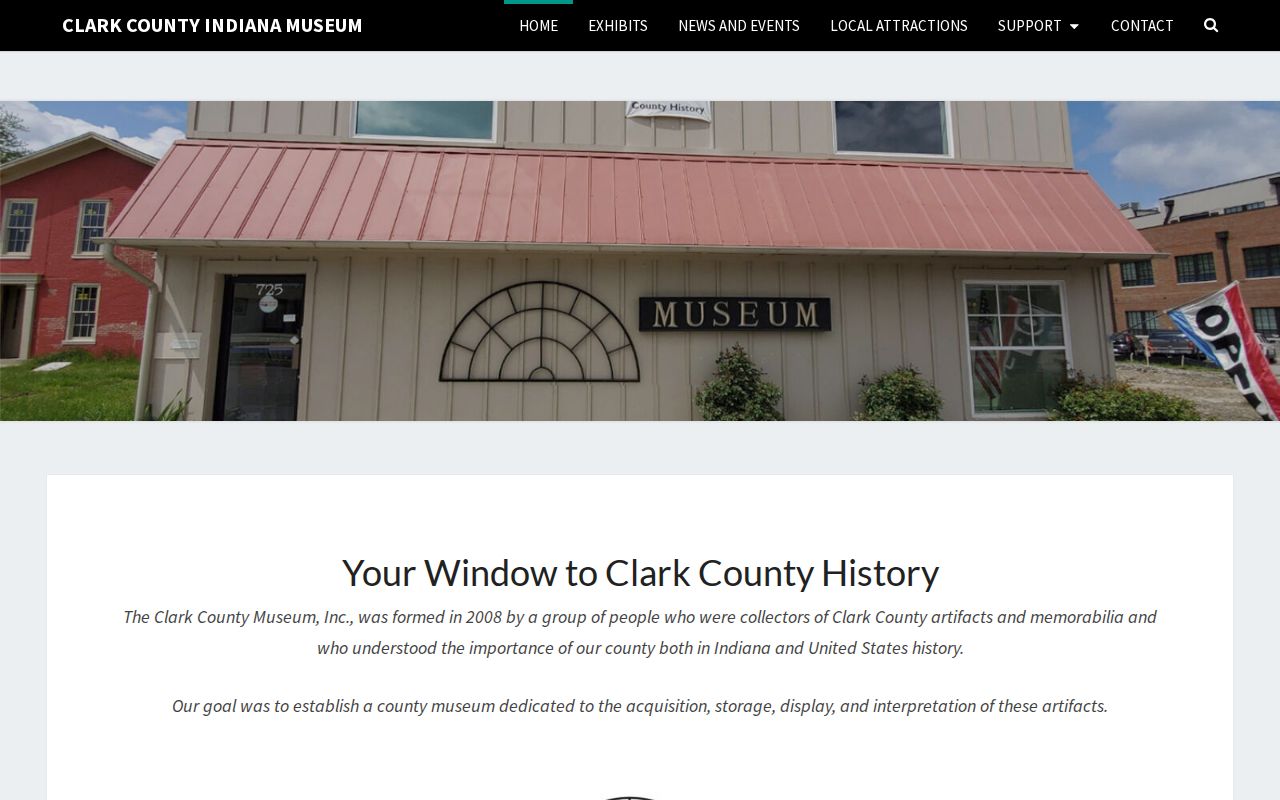
Museum material can add context after official records establish the identity, place, and date.
Limits on Jeffersonville Previous Residents
No source proves continuous occupancy. A deed owner may live elsewhere. A directory is a dated publication with omissions and abbreviations. A census is one scheduled snapshot. A newspaper mention may concern work or family rather than a home. Keep a research table with source, date, name as written, role, address, parcel, and confidence note.
Previous-resident research is well suited to house history, genealogy, estate and heir questions, and understanding a Jeffersonville block. Do not expose confidential addresses or private identifiers. Indiana's Safe at Home program and voter confidentiality rules protect qualifying people, and Social Security numbers must remain out of the record trail.
Lawful use. Use past-resident records for legitimate personal research. Never use a historical trail to track, stalk, harass, threaten, or harm a living person.